

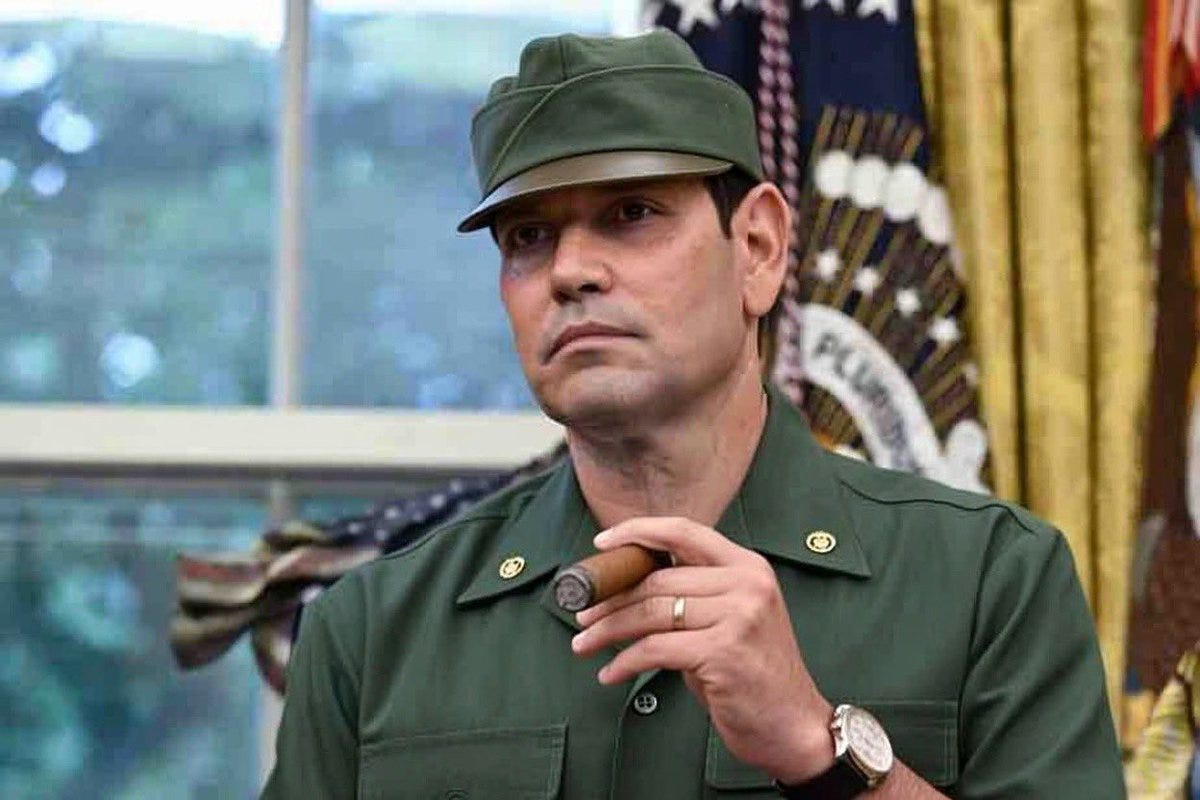
On Saturday, U.S. forces captured Venezuelan President Nicolás Maduro in a dramatic strike on Caracas. Within hours, Secretary of State Marco Rubio stood at Mar-a-Lago and delivered a warning that sent shockwaves through Havana: “If I lived in Havana and I was in the government, I’d be concerned.”
That’s about as direct as it gets short of an outright threat.
The Donroe Doctrine
Marco Rubio was raised in Miami by Cuban immigrant parents. He grew up hearing stories of how communism destroyed lives on the island. The “Donroe Doctrine”—Trump’s reinterpretation of the Monroe Doctrine—establishes that no state in the Americas can serve as a refuge for regimes that sustain criminal networks or threaten U.S. hegemony. Cuba, which Rubio calls “the head of the snake,” is the next logical target.
The Venezuela operation proved capability and willingness. Thirty-two Cuban agents were killed in the strike. Last year, Rubio reactivated Title III of the LIBERTAD Act, allowing private lawsuits against anyone “trafficking” in confiscated Cuban property. And Cuba is economically collapsing. Without Venezuelan oil subsidies, which the Maduro capture has now severed, Havana faces a financial void. Trump himself declared “Cuba is ready to fall.”
Whether through collapse or intervention, the endgame is regime change. The timeline is uncertain but the direction is clear.
The Certified Claims: $8 Billion in Dormant Assets
When Castro nationalized American property in 1959-1960, the U.S. government created a legal framework for eventual recovery. The Foreign Claims Settlement Commission certified 5,911 claims with a principal value of $1.85 billion. With 65 years of 6% simple interest, the total value today is approximately $8 billion.
These aren’t theoretical claims. They’re legally certified property rights recognized by the U.S. government, waiting for regime change to be enforced. The LIBERTAD Act explicitly requires claims resolution as a condition for normalizing relations with any post-Castro government.
For mega-caps like Exxon ($71M claim), Chevron ($50M), and Coca-Cola (~$27M), their Cuban exposure is a rounding error. But there’s one public company where the claims represent meaningful optionality.
The Claims Play: Marriott International
Marriott controls the second-largest certified claim against Cuba, $181.8M in 1960s dollars, through its acquisition of Starwood, which had acquired ITT Sheraton. With interest, the floor value exceeds $890 million. But the real story is what they have claims to.
The claim includes land adjacent to Jose Marti International Airport that was confiscated for runway expansion, plus legacy telecom infrastructure from the former Cuban Telephone Company. These aren’t just financial claims, they’re negotiating leverage. Any new government expanding the airport or modernizing telecom will need to deal with Marriott.
Marriott is also the only major U.S. hotel company already operating in Cuba, with OFAC-licensed properties including the Four Points by Sheraton Havana. When the floodgates open, they’ll move first.
The math: Cuba at maturity could support 100,000+ quality hotel rooms (it’s 90 miles from Florida, closer than the Bahamas). Marriott typically captures 25-30% share in premium Caribbean markets. The operating upside plus claims settlement could add $3-5B in value, or 4-6% of their $85B market cap. It’s not a reason to back up the truck, but it’s meaningful embedded optionality the market may be underpricing.
Other Ways to Play Cuba
Cruise Lines. Cuban ports were briefly open during the Obama era. Carnival (CCL), Royal Caribbean (RCL), and Norwegian (NCLH) would immediately benefit from restored access. Havana is a natural addition to Caribbean itineraries.
Telecom Infrastructure. Cuba’s telecom infrastructure is decades behind. Building 5G networks for 11 million people represents a multi-billion dollar opportunity. American Tower (AMT) and Crown Castle (CCI) are the obvious beneficiaries.
Construction & Infrastructure. Cuba’s infrastructure isn’t crumbling, it’s nearly destroyed. Roads, ports, power generation, water systems, everything needs rebuilding. Caterpillar (CAT), Fluor (FLR), and Jacobs (J) could all see significant Cuba-related demand.
Mining. Cuba has significant nickel and cobalt reserves which are critical minerals for EV batteries. Canadian company Sherritt International currently derives 75% of revenue from Cuban operations. American miners could compete under new ownership structures.
Agriculture. A French agronomist once said Cuba could feed five times its current population with proper management. Deere (DE) and AGCO could find a significant new market for equipment.
Real Estate. Cuban real estate has been frozen for decades. Havana’s colonial architecture, Varadero’s world-class beaches (consistently ranked top-10 globally), and 65 years of pent-up demand make this one of the last untapped markets in the Western Hemisphere. No direct public play here, but watch for private equity moves.
Conclusion
Marco Rubio has waited his entire political career for this moment. Cuba, economically devastated and cut off from Venezuelan subsidies, is vulnerable. When Cuba opens, $8 billion in certified claims will be in play, and companies across multiple sectors will benefit.
Marriott offers the most direct claims exposure among liquid public equities. Cruise lines offer the most immediate operational upside. Infrastructure plays are the safest bet on a multi-year rebuild. None of these are “back up the truck” opportunities, Cuba is a small economy, but for investors already interested in these sectors, the Cuba optionality is a free kicker worth understanding.
And maybe as we get a little closer to “D-Day” (or maybe a Bay of Pigs metaphor would be better here), maybe other options present themselves.
Cuba Libre.
Disclaimer: The information provided here is for general informational purposes only. It is not intended as financial advice. I am not a financial advisor, nor am I qualified to provide financial guidance. Please consult with a professional financial advisor before making any investment decisions. This content is shared from my personal perspective and experience only, and should not be considered professional financial investment advice. Make your own informed decisions and do not rely solely on the information presented here. The information is presented for educational reasons only. Investment positions listed in the newsletter may be exited or adjusted without notice.