

I’m writing this late at night and I’m not planning to give it the usual edit and review because I want to get it out for tomorrow. Forgive me.

Those red lines represent a lot of pain…
$1.7 Trillion, just in the Mag 7 alone.
One of the most mind-bogglingly violent periods I’ve seen in markets. Obviously, I’ve seen redder stretches, but never ones that came so out of the blue and with so little explanation. This time around there is no obvious exogenous event.
This much blood with this little explanation obviously elicits a lot of fear. To make matters worse, the rotation from big tech names to small caps echoes one very familiar crash.


Take a look at these two charts. The one on the right shows the ratio of the Russel to the Nasdaq circa the dotcom crash of 2000. The charts have some scary similarities.
There is, however, one key difference—the fact that during the dotcom crash in 2000 the Russel was flat whereas here, the Russel has gone up as the Nasdaq has gone violently down.
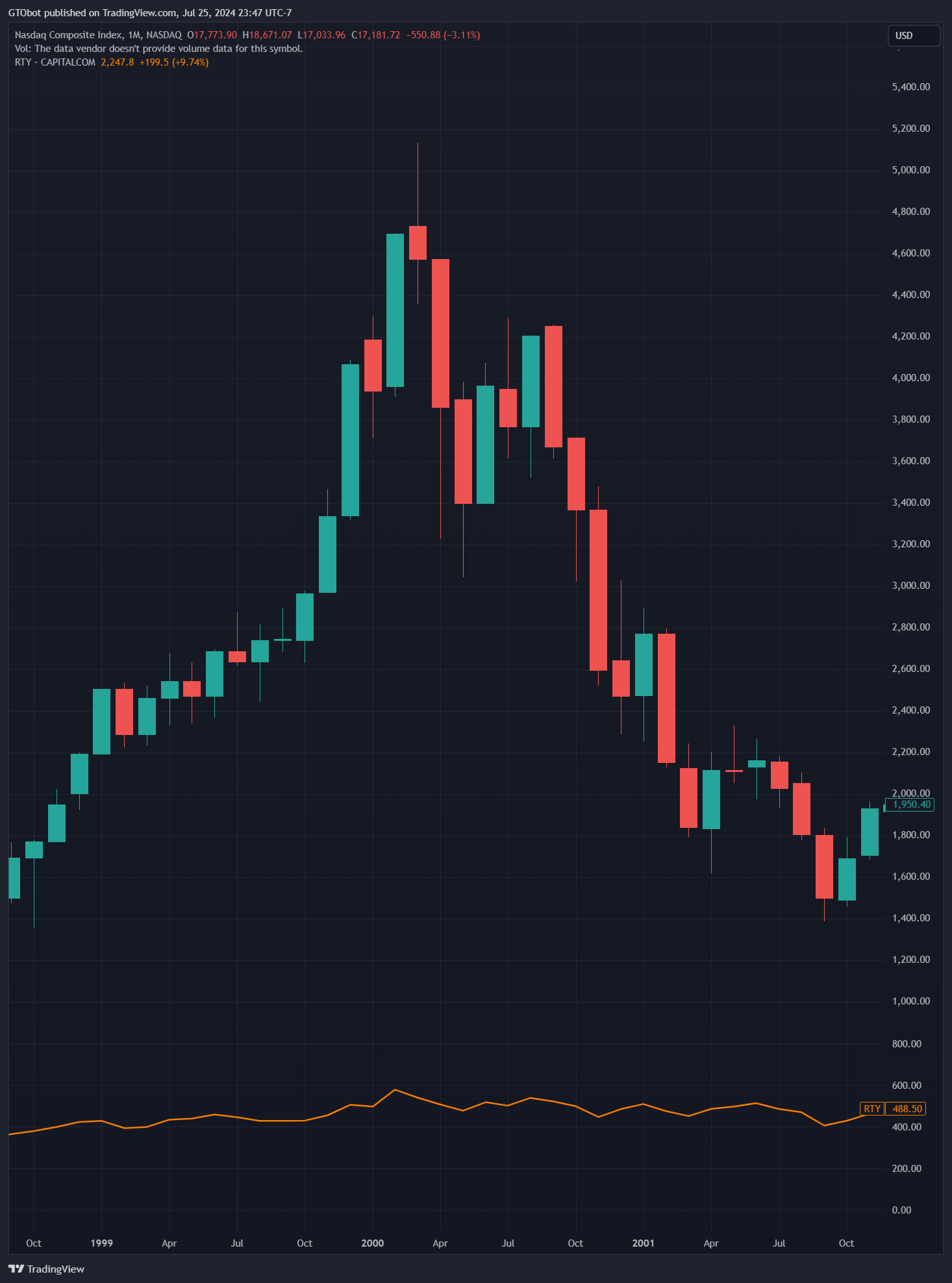
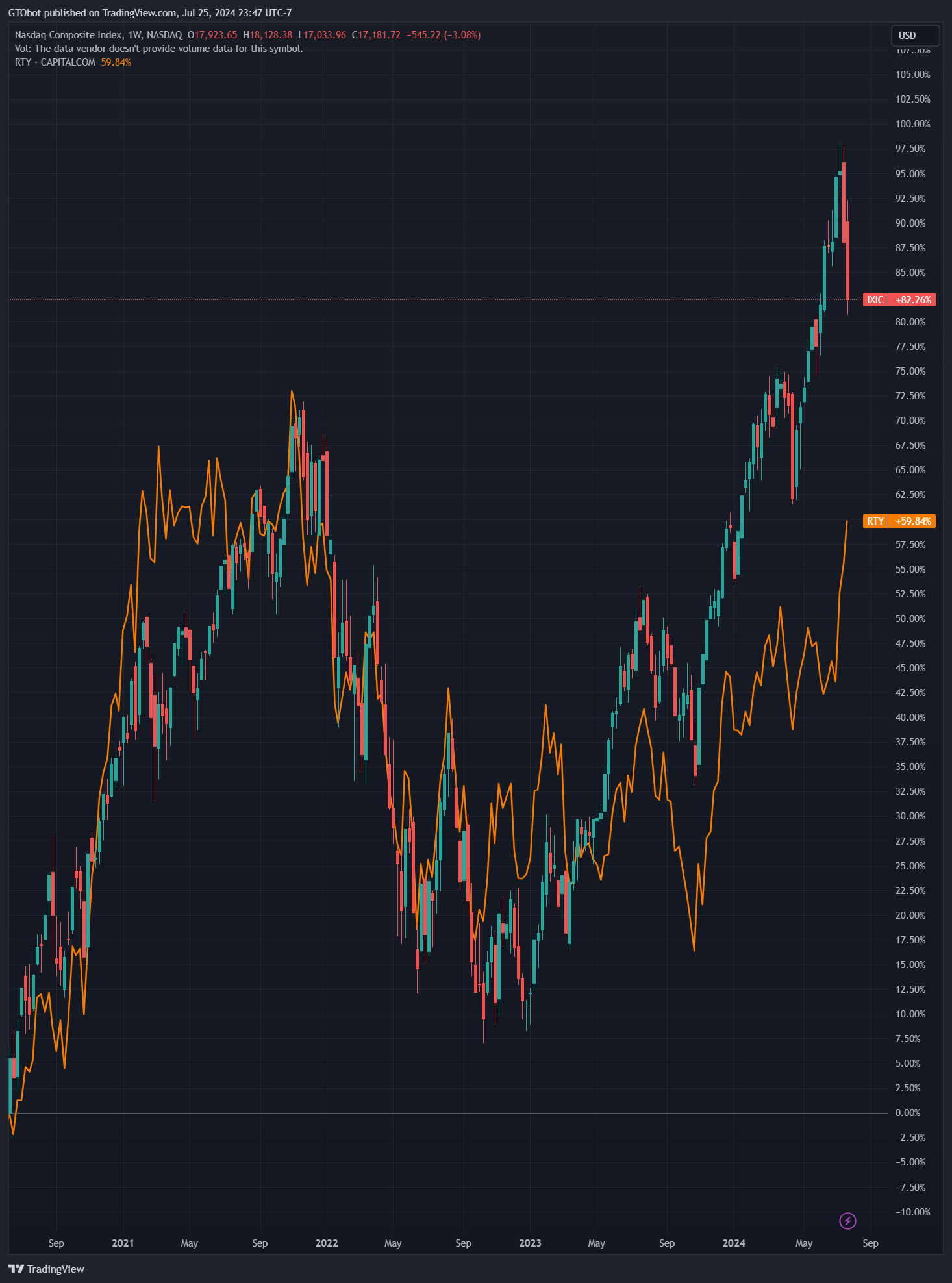
So long as that trend continues, I think we are “all right” in the sense that it is much more likely to be a run-of-the-mill rotation (albeit an extremely violent one), rather than a full scale meltdown.
Furthermore, crypto wasn’t around in 2000 to compare to, but BTC has done surprisingly well as the Nasdaq has, well, shit the bed.
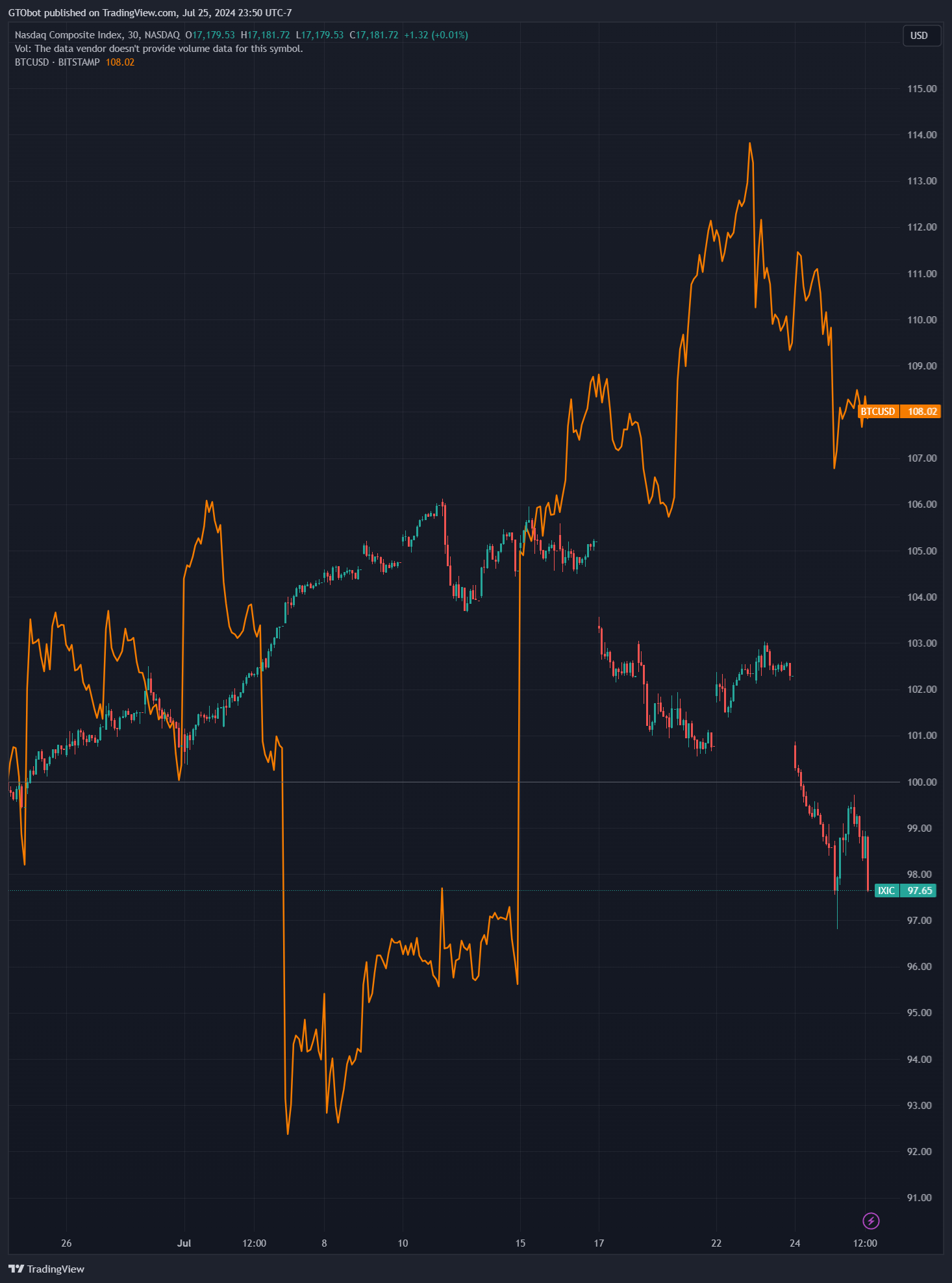
These signs give me hope that we are not entering a broader-based bear market or full risk off scenario.
Risk
Still, I think it’s prudent to go cautiously from here. It’s not immediately clear to me how much room this rotation has to run, or where we go from here. I assume we all have tilted overweight tech this year as that has been the trade that was working. It’s probably a good idea to return to a broader portfolio, as it’s become less clear what’s going to work the rest of the year and beyond.
Still, selling big chunks of your portfolio after a 9% drop to chase a sector that has been pumping isn’t great trading. I wish there was an obvious answer.
This is why they say hedge when you can, not when you have to. The hedges need to be on before the big moves.
My biggest advice (a bit late, unfortunately) would be to use this as a time to mentally stress test your portfolio. How much exposure would you have to a 2000-style crash? If the answer is some variation of “too much” then you need to take exposure off. Use bounces to de-risk the positions that are oversized.
If you’ve been overweight tech (as I have) then this has been a good year for you. Remember:
Pigs get fat, and hogs get slaughtered.
Looking Ahead
In about 5.5 hours, the PCE (Personal Consumption Expenditures) data will be released. I’ve been sitting at my desk, trying to predict the impact, but it has proven surprisingly difficult.
For years, we've been in a “cooling price is bullish” environment, where lower PCI/PCE numbers have signaled to the Fed that it’s safe to reintroduce liquidity into the market.
However, I’m not so sure that’s the case anymore.
Recently, the market has settled on the idea that the Fed will start cutting rates in September.

With the July meeting just days away, September is now the earliest reasonable time for a rate cut. Therefore, there's not much to gain from lower PCE numbers tomorrow, as they are unlikely to prompt faster or more significant liquidity measures.
In fact, lower PCE numbers might even lead to further market selling.
On the other hand, lower PCE could signal a more aggressive rate-cutting campaign, which might support stocks. Conversely, higher-than-expected PCE could make the Fed more cautious and delay significant rate cuts.
Ultimately, the most bullish outcome tomorrow is probably a number that’s relatively in line with expectations. Clear air followed by resumed risk-on is our best case scenario.
I think an “out of line” print either way would be worrisome to the market. Just the uncertainty alone could spark more selling. If I had to choose between “too hot” or “too cold,” I would still lean towards “too cold.”
Let the recession come and bring the anticipated liquidity with it.
Please also always remember... none of this is financial advice. I’m not a professional. I quite literally don’t know what I’m doing. I’m just a guy, with a keyboard, who scored high enough on some standardized tests to think I can beat the market.